


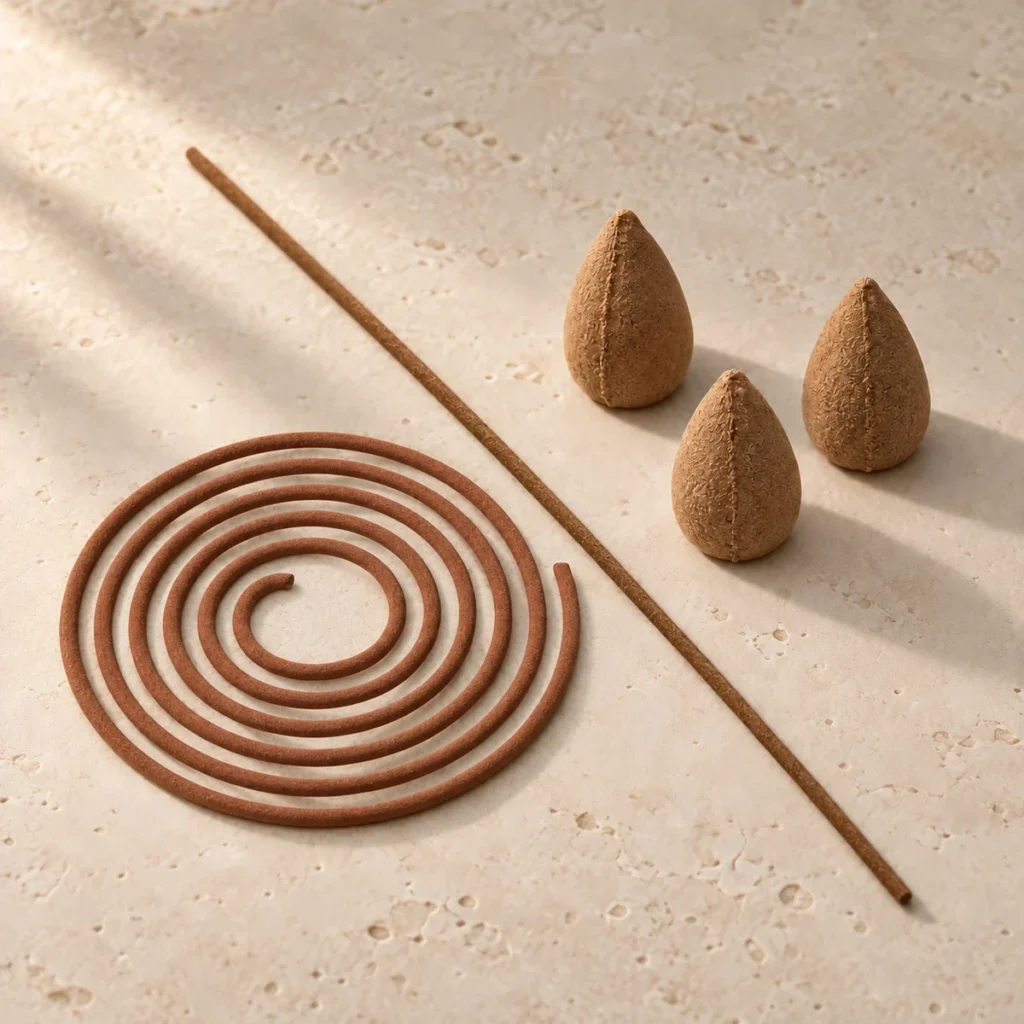
Sandalwood incense is incense made with sandalwood material or a sandalwood-centered fragrance. It is a scent category, not a single shape. You can find it as bamboo-free incense sticks, coil incense, and backflow cones, and each form creates a different experience.
The scent is usually described as warm, soft, and woody, often with a smooth or lightly creamy quality. The right form depends on more than fragrance, though. Burn time, the holder you own, room size, ventilation, and whether you want a backflow smoke display all matter.
MORI TASTE offers sandalwood in all three forms. This guide explains how they differ and gives you a practical way to choose among them.
What Is Sandalwood Incense Made From?
Sandalwood incense uses sandalwood as one of the main sources of its fragrance, combined with plant materials that allow the incense to hold its shape and burn. It is a finished formula rather than a piece of unprocessed sandalwood.
MORI TASTE’s three sandalwood products use blended formulas. Sacred Forest incense sticks and Sacred Sandalwood coil incense use sandalwood powder. Ancient Sandalwood backflow cones use sandalwood essence. All three formulas also include natural wood powder, plant extracts, and a plant-based binder.
That distinction matters because products labeled “sandalwood” can smell different from one another. The sandalwood material, the rest of the formula, and the way the incense burns all affect what reaches your nose.
What Does Sandalwood Incense Smell Like?
The simplest description is warm, mellow, and woody. Many sandalwood fragrances also have a rounded, creamy quality. They are not usually sweet in the way vanilla or candy is sweet, but some people notice a soft sweetness beneath the wood notes.
MORI TASTE describes its sandalwood products with terms such as warm, woody, soft, creamy, and mellow. Those words describe the intended scent direction, not a promise that everyone will experience the fragrance in exactly the same way.
Unlit incense gives off the fragrance of the dry material. Once it is burning, smoke becomes part of the experience. In a small or poorly ventilated room, the smoke may become more noticeable than the subtler sandalwood notes. Strong airflow can have the opposite effect by dispersing the fragrance quickly and changing the burn.
The form also changes how you experience the same scent family. Sticks, coils, and cones release fragrance on different timelines and place the smoke at different heights and distances from you.
Sandalwood Incense Sticks vs. Coils vs. Backflow Cones
These three forms are designed for different routines. The most useful comparison is burn time, holder compatibility, and whether the visual effect matters to you.
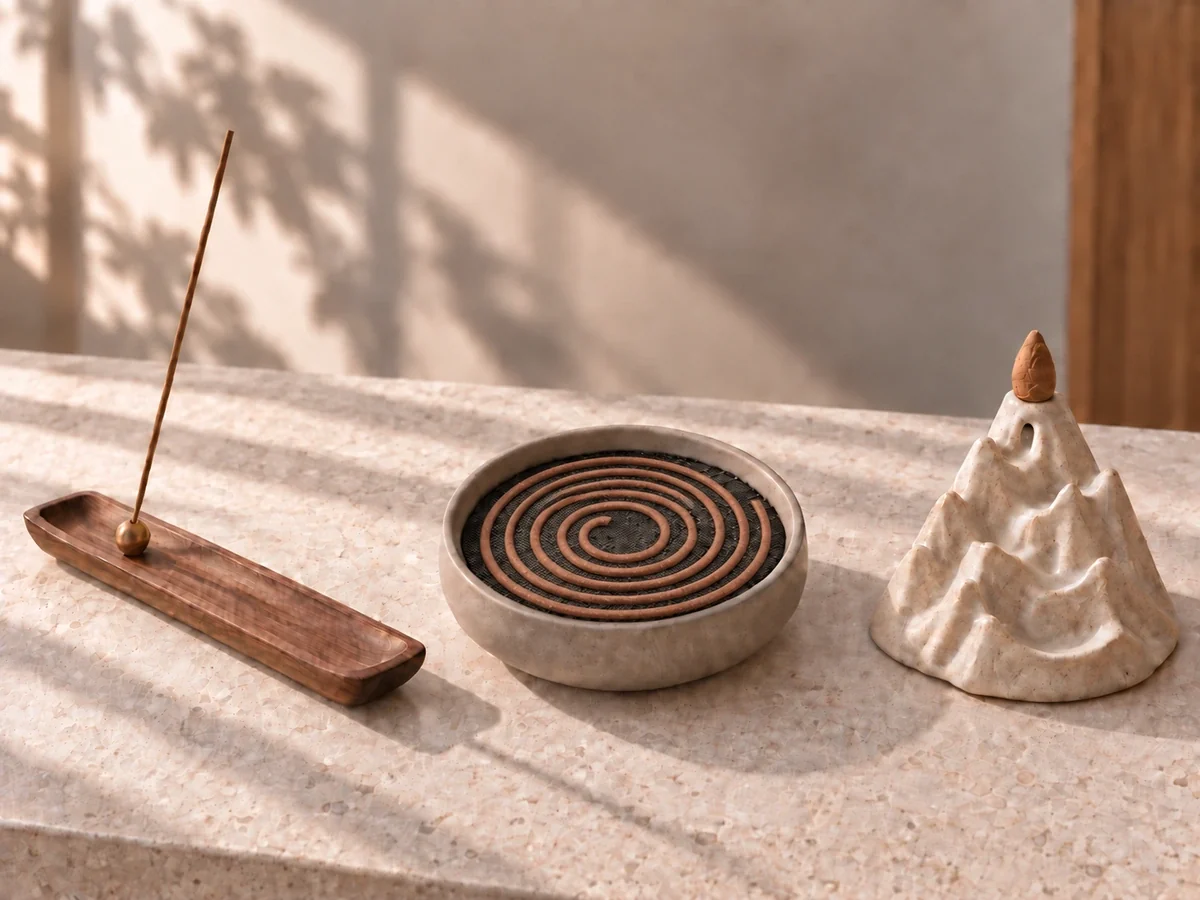
| Form | MORI TASTE reference burn time | Holder needed | Best fit | Main limitation |
|---|---|---|---|---|
| Bamboo-free incense stick | About 30–60 minutes | A stable stick holder that catches the full ash fall | Reading, tidying up, or a moderate-length daily routine | Ash falls along the length of the stick |
| Coil incense | About 90–120 minutes | A stable, heat-resistant burner that supports the full coil | A longer tea session, writing period, or quiet activity | The long burn requires continuous supervision |
| Backflow cone | About 10–15 minutes | A compatible backflow burner with an inlet aligned to the cone’s base hole | A shorter fragrance session with a downward smoke display | Airflow, hole alignment, and residue can interrupt the effect |
These times are useful for comparison, but they are not exact guarantees. Airflow, temperature, humidity, differences between individual pieces, and burner design can all affect the actual burn.
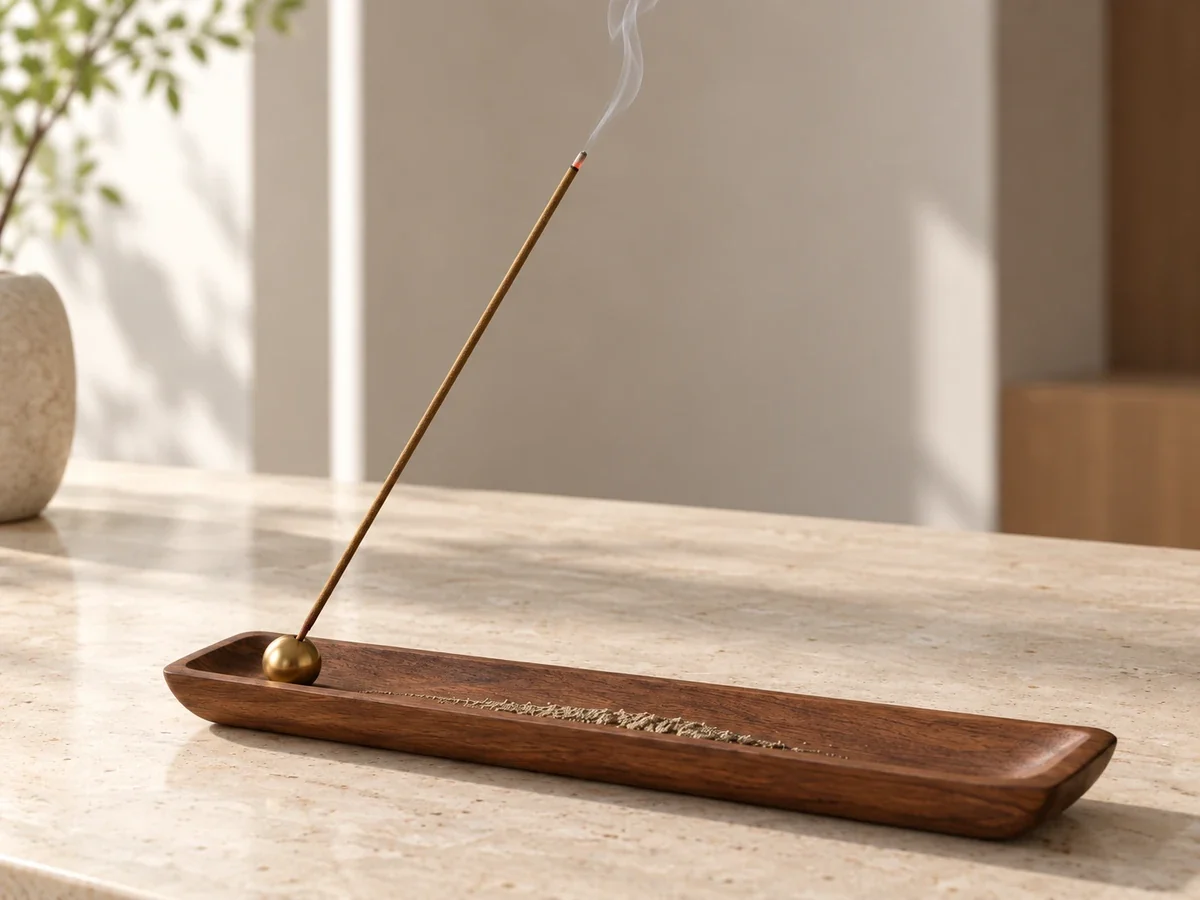
Sandalwood Incense Sticks: Simple for Everyday Use
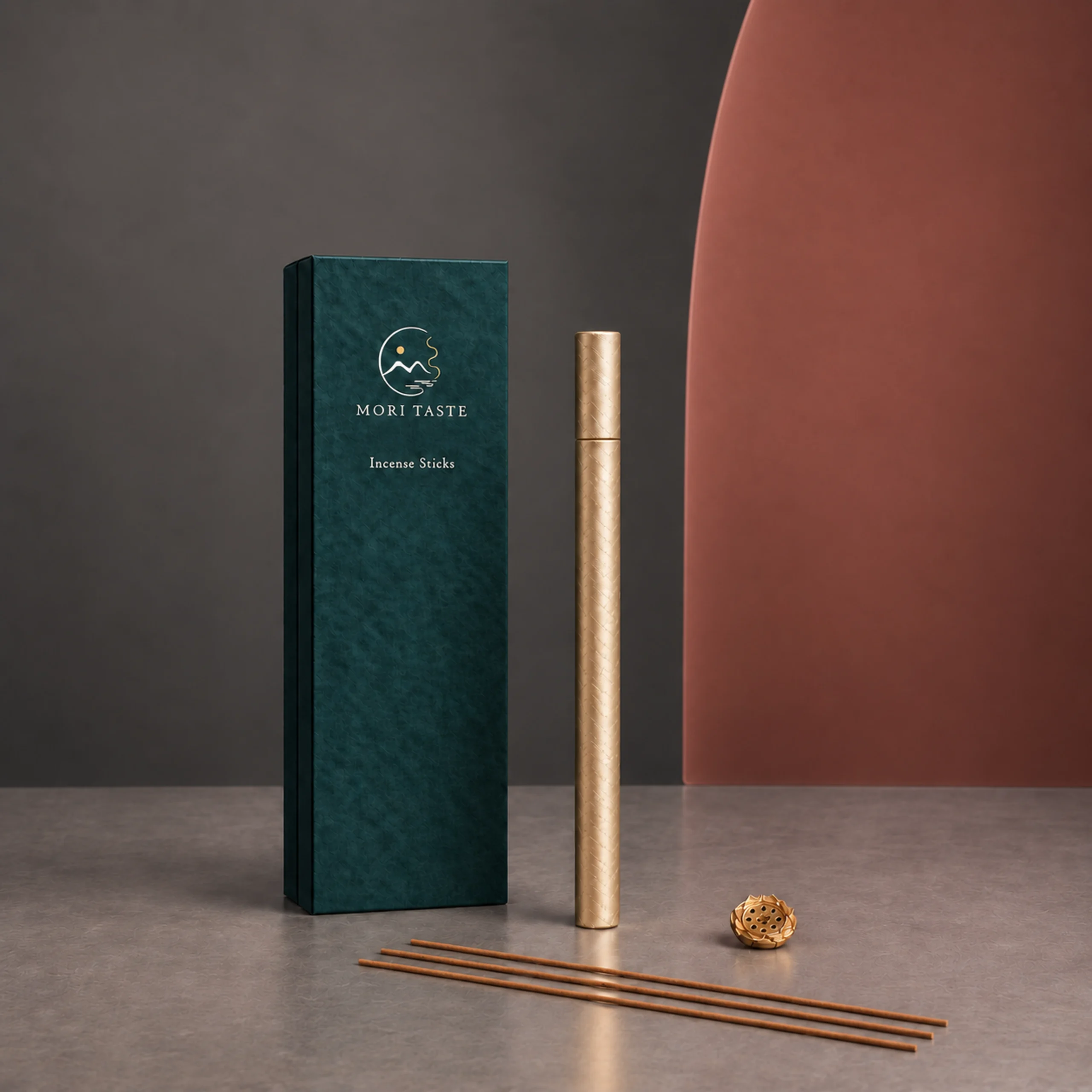
Bamboo-free sticks are the most straightforward of the three forms. They do not need an internal smoke channel or a specially aligned burner. Their moderate burn time works well when you want fragrance through a reading session, light household task, or quiet break without committing to the longer burn of a coil.
Use a holder that keeps the stick upright or securely angled and catches ash along its full length. A thin stick can still leave a hot ember and a trail of ash, so its small size does not reduce the need for supervision.
Sandalwood Coil Incense: Made for a Longer Session
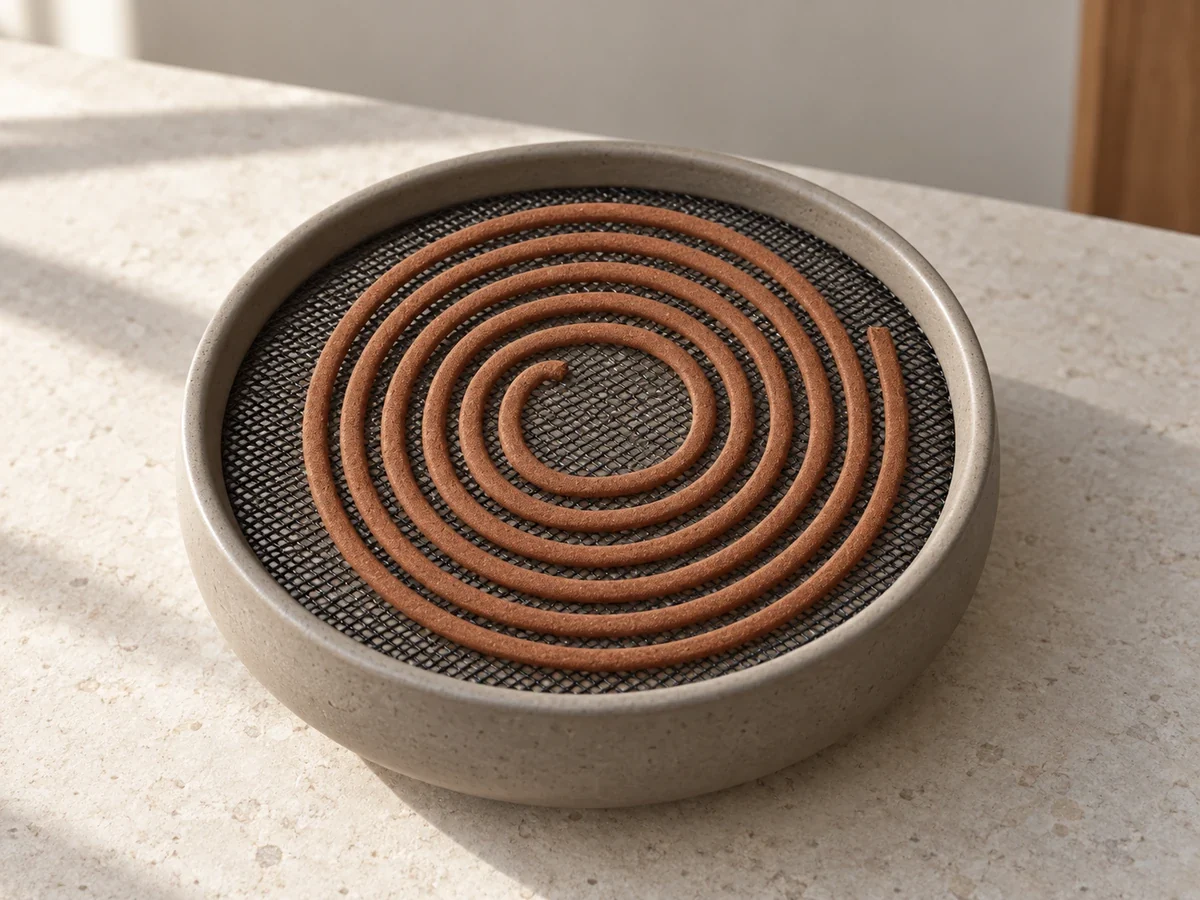
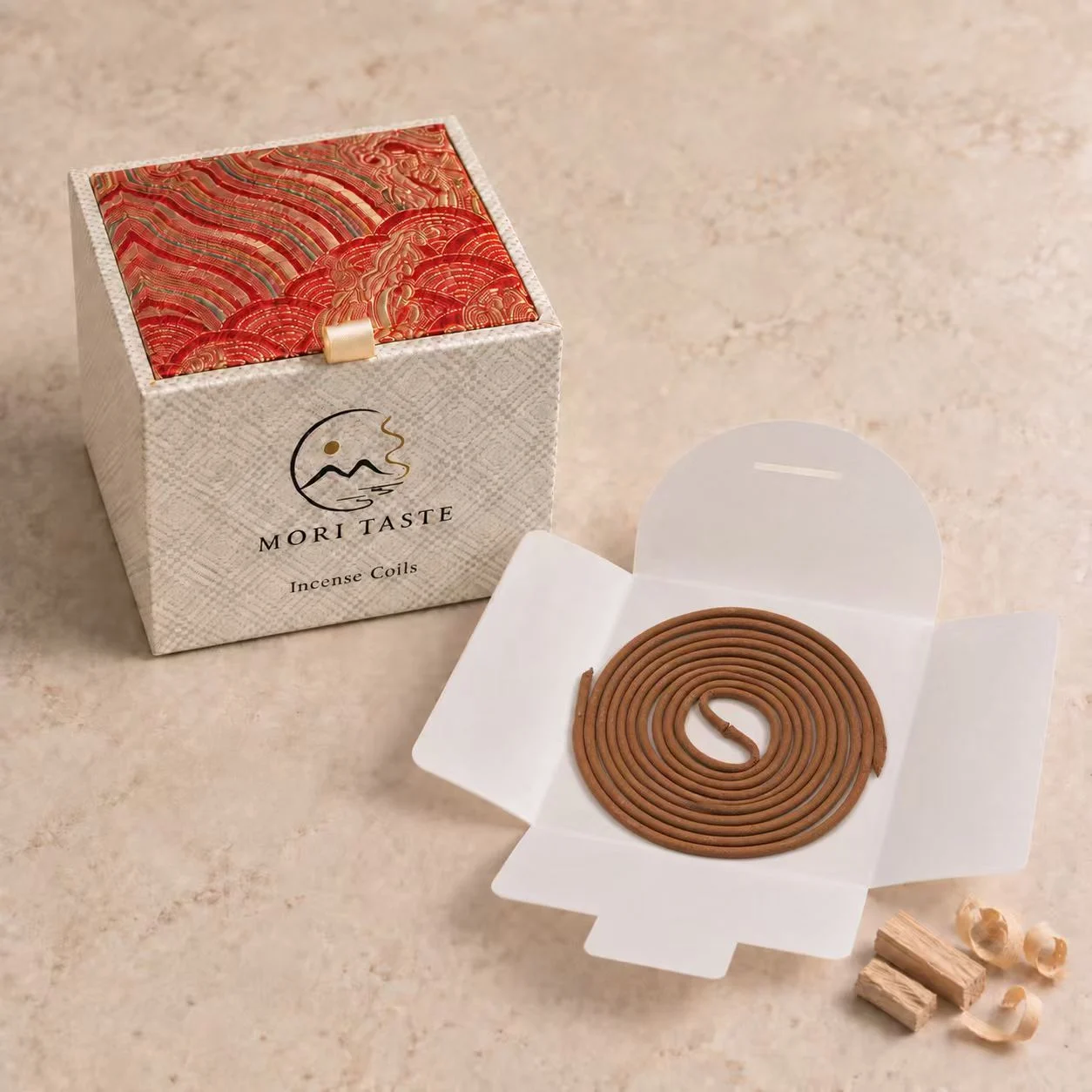
A coil fits a long length of incense into a compact shape, which allows it to burn much longer. It can suit a planned tea session, writing period, or other activity during which you will remain nearby.
The longer burn is only an advantage when it matches your schedule and space. A coil is a poor fit if you will leave soon, plan to sleep, have limited ventilation, or do not want fragrance to linger for that long. The burner also needs to support the whole coil so the burning section cannot touch the table or another combustible surface.
Sandalwood Backflow Cones: A Shorter Burn with a Visual Effect
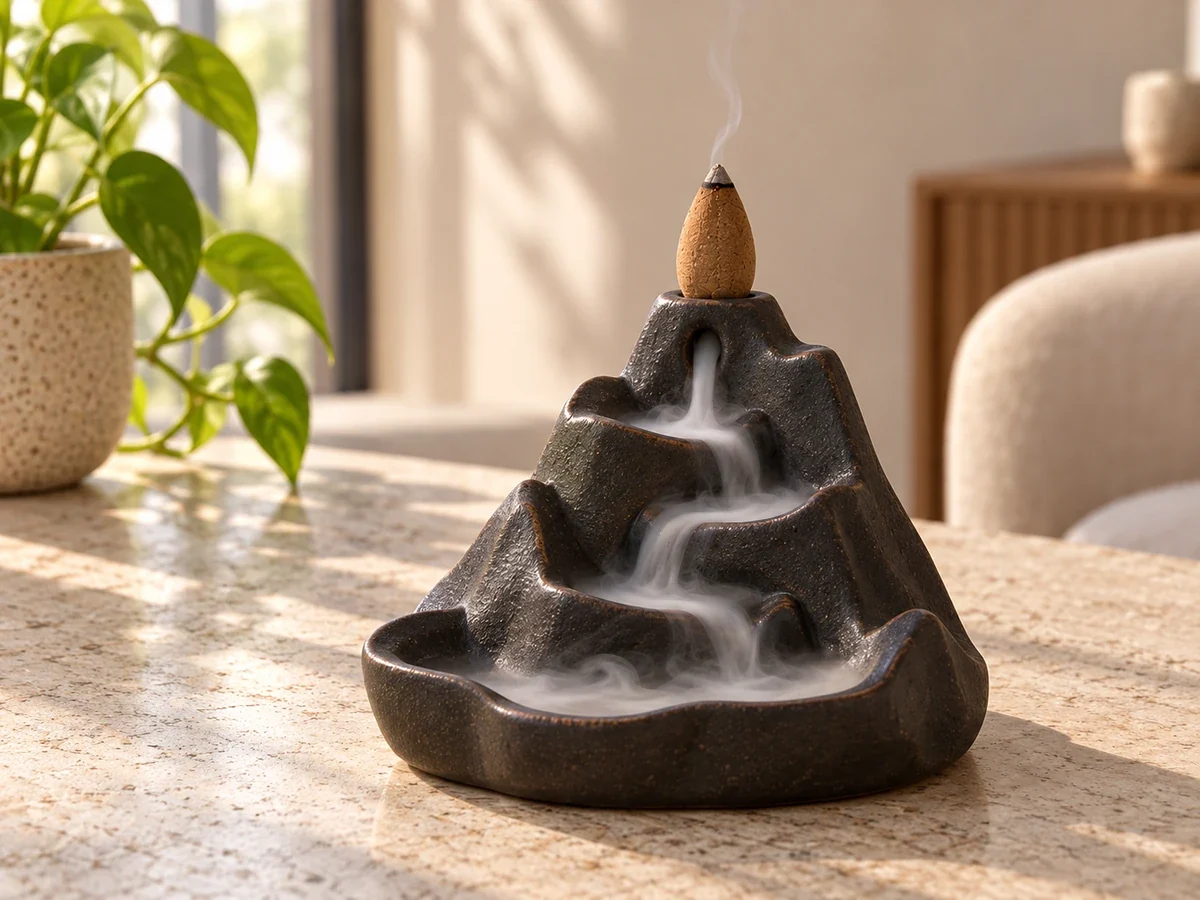
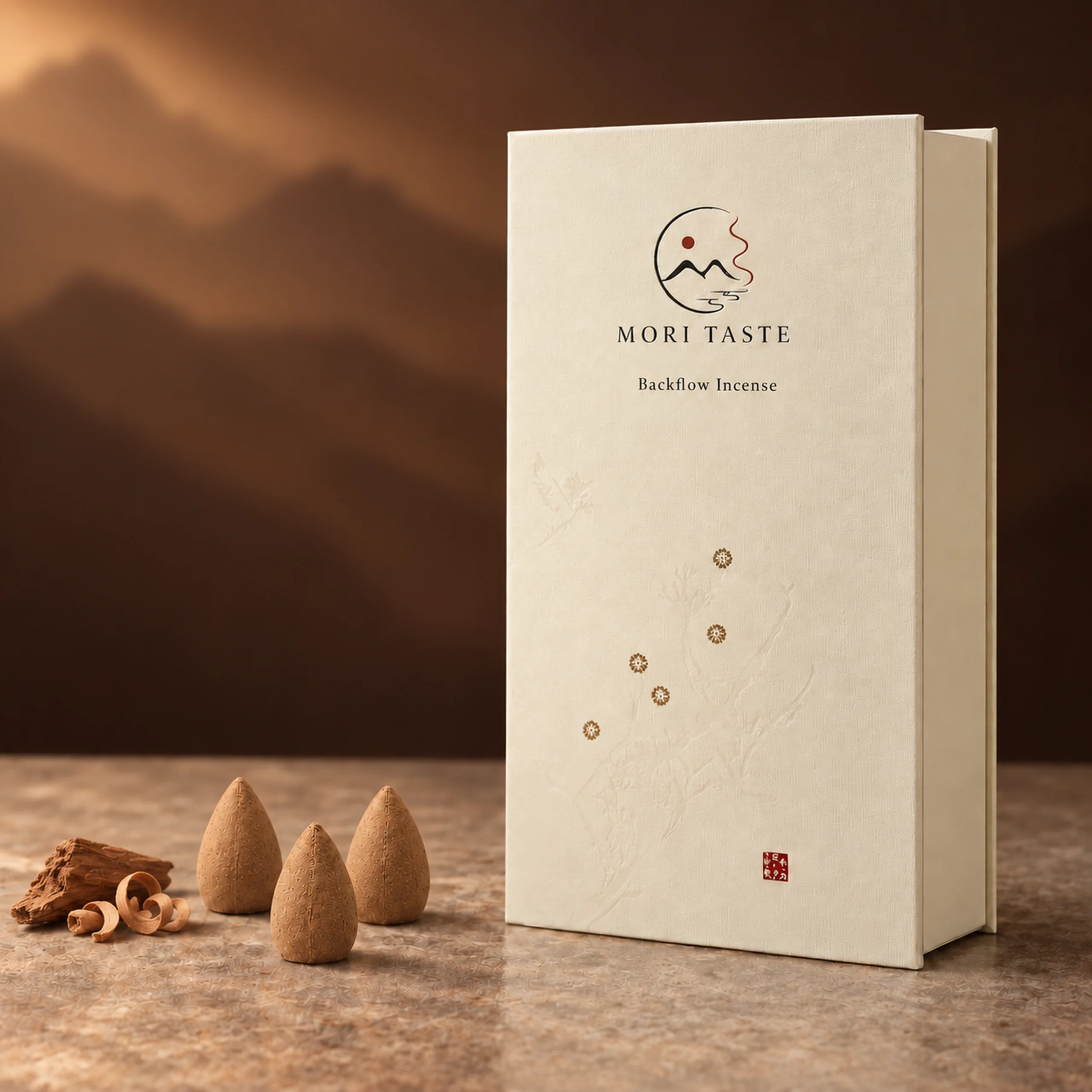
A backflow cone has a channel through its base. When that channel lines up with the inlet on a compatible burner, part of the smoke travels downward through the burner and creates a waterfall, cloud, or mountain-like effect.
Choose this form when the moving smoke is part of what you want. A regular tray may catch the ash, but it will not create the intended backflow display. Fans, open windows, air-conditioning vents, incorrect hole alignment, and residue inside the burner can all weaken or disrupt the smoke flow.
How to Choose the Right Sandalwood Incense Form
1. Start with the Time You Can Stay Nearby
Match the burn to the time you can supervise it. A backflow cone fits a short session of roughly 10–15 minutes. A stick works for a moderate-length routine. A coil makes sense when you have planned a longer activity and can remain in the area for the full burn.
Do not choose a coil only because the longer burn appears to offer more value. If you use only part of that time and then leave it unattended, the extra duration becomes a safety problem.
2. Check the Holder You Already Own
Sticks, coils, and backflow cones do not automatically work with the same holder. A stick holder needs to secure the stick and catch its ash. A coil burner needs to support the coil across its full shape. A backflow burner needs an inlet that lines up with the hole in the cone.
If you do not want to buy another burner, eliminate the forms that are not compatible with the holder you already have. This gives you a practical shortlist before you compare fragrances.
3. Decide Whether Scent, Duration, or Motion Matters Most
All three forms can deliver a sandalwood fragrance, but each emphasizes something different. Sticks offer a simple routine. Coils prioritize duration. Backflow cones pair a shorter burn with a moving smoke display.
No form is automatically more refined than the others. The better choice is the one that fits the way you will actually use it.
4. Consider Room Size and Ventilation
Burning incense adds smoke to the room. The U.S. Environmental Protection Agency explains that combustion produces indoor particulate matter and recommends proper ventilation when burning candles or incense indoors.
In a small room or a space with weak air exchange, use a shorter burn, improve ventilation, or skip burning incense. “Natural,” “plant-based,” and a higher price do not mean smoke-free. If smoke or fragrance causes discomfort, extinguish the incense and move away from the smoke.
5. Allow for Personal Scent Preference
Fragrance descriptions point you in a direction, but they cannot replace your own sense of smell. Someone who likes dry, bright woods may find a creamy sandalwood too soft. Someone who dislikes smoky scents may notice the combustion aroma more than the sandalwood itself.
For a first try, burn one piece for a shorter period in a ventilated space. Lighting several pieces at once makes it harder to judge the fragrance and adds more smoke.
Why Do MORI TASTE Sandalwood and Agarwood Incense Cost More?
MORI TASTE prices its sandalwood and agarwood incense above most of its other scent options because these two raw materials cost more to source. The same price pattern appears across sticks, coils, and backflow cones in the current catalog, so the difference follows the fragrance material rather than one incense form alone.
The broader material market provides useful context. The Food and Agriculture Organization of the United Nations describes sandalwood oil as one of the more highly priced essential oils because of the nature of its raw material source and limited supply. A CITES report on agarwood describes it as a highly valued, resinous aromatic wood formed in Aquilaria and Gyrinops species, which are subject to Appendix II trade controls.
The higher price reflects MORI TASTE’s higher cost to purchase sandalwood and agarwood materials. It does not prove a specific ingredient percentage, medical benefit, or universal level of quality. Scent preference, burn time, form, holder compatibility, and room conditions remain the practical reasons to choose one product over another.
How to Burn Sandalwood Incense Safely
Sandalwood incense is still a burning product. A gentle scent and plant-based ingredients do not remove the risks from flame, embers, hot surfaces, ash, and indoor smoke.
- Use the correct stable, heat-resistant holder. It should secure the incense and catch all ash. Place it on a level, uncluttered surface where it cannot be knocked over.
- Keep it away from anything that can burn. The Seattle Fire Department recommends keeping candles and incense at least 12 inches from combustible materials. Curtains, paper, clothing, and packaging should stay outside that space.
- Provide ventilation without strong drafts. Fresh-air exchange helps with indoor smoke, but a fan or vent pointed at the incense can scatter ash, alter the burn, and disrupt a backflow effect.
- Stay in the room while it burns. Extinguish incense completely before leaving, going outside, or going to sleep. Do not rely on the estimated burn time to decide that it must already be out.
- Keep it away from children and pets. Account for the flame, hot ash, heated burner, and the exposed end of a stick.
- Wait for the holder to cool before cleaning. An ember can remain hot after the visible flame is gone. Confirm that everything is out and cool before moving the burner or removing ash and backflow residue.
This is general use and fire-safety information, not medical advice. Anyone with a respiratory condition, smoke sensitivity, or uncertainty about using incense should follow guidance from their healthcare professional.
Which MORI TASTE Sandalwood Incense Should You Choose?
- For a simple routine and moderate burn time: Sacred Forest | Australian Sandalwood Incense Sticks
- For a longer, continuously supervised session: Sacred Sandalwood | Sandalwood Coil Incense
- For a short session with a downward smoke display: Ancient Sandalwood | Sandalwood Backflow Incense Cones
These are MORI TASTE products, presented here because they correspond directly to the three forms compared in this guide. If you are still deciding on a scent or format, try the MORI TASTE Incense Recommendation Quiz and then check your room, available time, and holder compatibility before choosing.
Frequently Asked Questions
Is sandalwood incense sweet?
It can have a soft, rounded, or lightly creamy sweetness, but it is not usually sweet like candy. The formula, burn, room, and your own sense of smell can change how noticeable that quality is.
Are sandalwood and agarwood the same?
No. Sandalwood comes from aromatic trees in the Santalum genus. Agarwood is resinous aromatic wood formed in Aquilaria, Gyrinops, and some related species. They differ in how they form, how they smell, and how they are supplied. Agarwood is not simply a stronger or more premium version of sandalwood.
Which sandalwood incense form burns the longest?
Based on MORI TASTE’s reference times, coil incense burns the longest at about 90–120 minutes. Bamboo-free sticks are about 30–60 minutes, and backflow cones are about 10–15 minutes. Actual times vary with airflow, humidity, the individual piece, and burner design.
Do sandalwood backflow cones need a special burner?
Yes, if you want the intended downward smoke effect. The cone’s base hole needs to align with the inlet on a compatible backflow burner. A regular tray may catch ash, but it will not produce the complete backflow display.
Can sandalwood incense be used indoors?
It can be used indoors when the product directions allow it, but burning incense creates smoke and particulate matter. Use a stable heat-resistant holder, keep the room properly ventilated, maintain distance from combustible materials, and supervise the full burn.
Why are MORI TASTE sandalwood and agarwood scents more expensive?
MORI TASTE pays more to source sandalwood and agarwood raw materials. That sourcing cost explains the higher price. It does not mean that one incense form is inherently better, and the price should not be treated as proof of a medical benefit, purity, or a specific ingredient percentage.
Choose the Form That Fits Your Routine
Choose sandalwood incense by starting with how you plan to use it. Pick a stick for a straightforward, moderate-length routine; a coil for a longer period you can supervise; or a backflow cone for a shorter session centered on the smoke display. Then confirm that your holder fits, your room has adequate ventilation, and the burn time works with your schedule.
What matters most in your own incense routine: the scent, the burn time, or the movement of backflow smoke? Share your setup in the comments.
 VIEW PRODUCT
 VIEW PRODUCT
 VIEW PRODUCT
Leave a Comment
All fields are required
Your comment will appear after approval